
How to Edit a Manuscript for the 10,000th (or 1st) time without losing your mind
3 simple revision hacks that are working for me

About a month ago, I received edits back from my agent on my manuscript, Some Kind of Criminal. I’ve been working my way through slowly, aiming to send it back by the end of September.
And, frankly, it’s tricky. There are 100+ line level comments. A request to remove three chapters 😨. And often the feeling of this is the 11th draft of this goddamned book and I can’t tell what’s good anymore.
So - here it is, written during a revision session, three tips that have helped me stay sane throughout the process. Whether you’re self-editing your manuscript for the first time, handling beta reader feedback, or working through a developmental edit, you might find these useful too!
A mechanism to mark progress.
I went through and put a a sticky tab on every page with a comment. Once I’ve resolved the comment completely (which might be on that page or might involve changes throughout the whole book), I remove the tab.
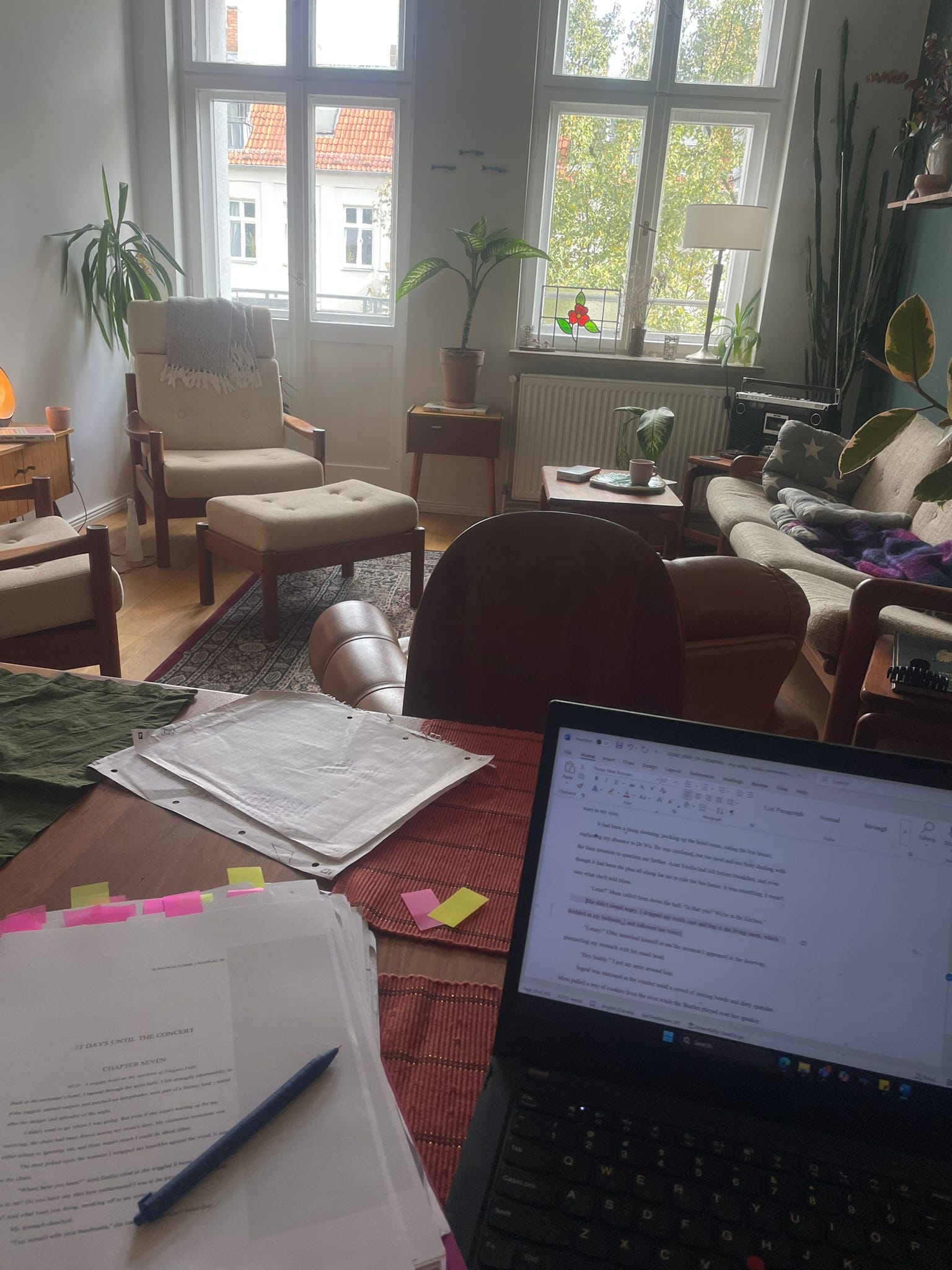
In the past, I’ve had an editing plan or editing checklist of ‘things to fix’ that I can cross off. Sometimes editing is fast but most of the time it is slowww and it feels like pulling teeth as I rewrite the same sentence thirty times and then five minutes later delete the paragraph. It often feels like we’re not moving forward, even though we are - so a physical way to mark progress can keep us going.
Subdocuments.
The hardest thing in this revision is nailing the main character’s emotional journey: making sure I’m seeding in her emotional make-up so readers are invested and clear on her motivation and her misbelief.
I created a new document called ‘LENA’S EMOTIONAL JOURNEY.’ At the top, I wrote her misbelief out in her own words, in bold.
Below that I’m literally pasting in the prose that is meant to convey this to the reader. I’ve tried to be subtle, but not too subtle, and seed it throughout. So this document now basically contains all the breadcrumbs that should add up to the larger trail in bold.
As I get deeper in the manuscript, I can refer back to those crucial sentences — some are one line, some are a paragraph or two — without having to search all through the manuscript for them again.
This way, I have a reference for her internal progress all in one document so I can keep things consistent but also track where it’s expanding and complicating, where it’s deepening, and where we start to see change.
I am toying with the idea of creating a separate doc for a thread of the capital-P Plot. The heist mechanics I have down, but the mystery around the violin the crew is stealing is complex — and has changed about a dozen times.
It’s only in these past few revisions I’ve realized the importance of every single word, how small adjustments can make or break emotional investment in the story. And putting it all on one page makes it easier to find the tiny nuances of language.
Craft books at the ready.
I haven’t read a new craft book cover to cover in a hot minute - but in the editing phase, I’m loving using them as references to help with particular problems. Of course, I had to be familiar with the books first, but they certainly come in handy.
My agent literally had an edit: your main character needs a save the cat moment here. I know what that means but it’s one thing to know something and another to know how to use it to improve your book.
So, I pulled out Save the Cat Writes a YA Novel and navigated to the respective section to refresh my memory (for being the title of the book, the section on saving the cat is surprisingly short and hard to find — it’s in the Setup beat).
When you read craft books while drafting, they can feel overwhelming. At the start of my writing journey, I often worried I was forgetting everything I’d read. So it’s fun in editing to say: okay I have this problem, which resource mentioned this again…? and to think of the craft talk in a more focused way!


What a busy summer it’s been! Between Oxford, the Edinburgh Fringe, my travel community’s weeklong festival and my upcoming family vacation - progress has been slow but it is still existent, which is probably the best I could hope for this time of year.
I would love to hear YOUR best editing tips, what you’re working on now, and what parts of the process YOU find most tricky!
Xo,
Nicole